













































*All claims made about students are informed by the form sent out by International Dateline, official interviews and conversations with students*
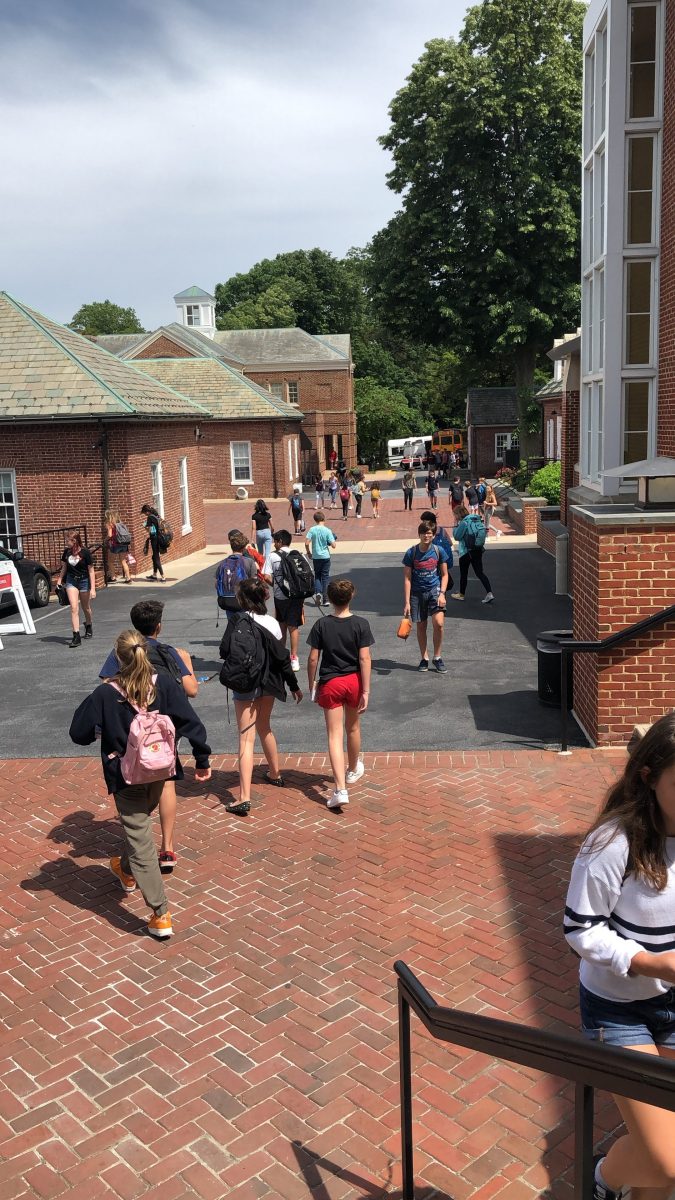
This new school year has brought unprecedented change and joy across campus and to the daily lives of students. As one looks around, they notice the new building, wonderful landscaping and students no longer walking around with phones in their hands. While all of these elements are new, one of these new editions has stood out. Notably, the new phone policy has sparked fierce debate among the entire WIS community. But what does the community think about all of this?
On Thursday, Oct. 2, the WIS Upper School received an email titled “WIS: An Update on Cell Phone Use During the School Day,” sent from Head of School Suzanna Jemsby at 3:30 p.m. The email stated that starting Oct. 14, phones would be banned from 8:10 a.m. until a student’s last class at either 2:50 p.m. or 3:45 p.m.
The new policy also underlined that if a cellphone is heard or seen, it will be confiscated, and students will pick it up at the end of the day. If the phone is confiscated for a second time, the student will get a conduct referral, and parents must pick up the phone.
The email cited the fact that “the students adapted quickly” to the new phone ban during lunch and that the administration saw an increase in conversations among peers. It also cited new upper school principal Dr. Mulazzi’s time to get to know the community, and the readiness to integrate the change.
While the policy seemed out of the blue for the students, there was actually a lengthy process to come to the final decision.
“We had weekly meetings last year called Culture Club [where] we talked about the culture that would be created with the creation of the new building. [Not having phones] was one of the pieces that I was very firm about from the get go,” Jemsby said. “I teared up in the gallery when I saw [students] chatting with one another.”
The choice to implement it was a mix of upper school principal Dr. Mulazzi’s experience with a similar phone ban at her previous school, more research about other schools and continued discussion about it.
“We’ve been talking about it for a long time and I just felt like it was picking up speed,” Jemsby said. “And we said ‘this is the moment’.”
Influenced by research and personal opinion, they also believed that the phone policy would be beneficial for students, and thus that it should be swiftly implemented.
“If we know something is good, why wouldn’t we just put it in place right now?” Associate Head of School Natasha Bhalla said. “If I knew that giving each of you a banana every single day would make you better students, I would just buy the bananas and give them to you.”
This sense of eagerness was mirrored with Mulazzi.
“So much of the research is really clear about student health and mental well-being and for me, it feels urgent,” Mulazzi said.
Immediately after the announcement, there were responses from students. Conversations were heard across campus, and questions echoed throughout the halls.
Since the email came after school hours for most students, many turned to their connection to the administration: their International Student Union (ISU) representatives. But ISU did not serve much help as they had only been informed of the phone ban mere minutes before the announcement.
The administration noted that they did not want to place such a heavy burden on ISU in making or taking responsibility for the decision themselves.
While this point can be understood, the lack of clarity about this has made students feel ignored. ISU serves as a platform for students’ voices to be heard. By excluding ISU, one takes students’ power to ask questions, understand what is happening, voice concerns and make a difference in their community.
“[The student body] can’t say anything about it,” freshman Aaliyah Al Said said.
On Oct. 3, after Sports Day, Mulazzi sent a follow-up email detailing the next steps. It stated that there would be an assembly on the subsequent Tuesday, time for questions in advisory on Wednesday and grade-level meetings on Thursday.
The assembly was an important moment to help explain the decision to students. The slideshow underlined the reasoning for the ban to ensure “focused learning, active engagement and positive social interaction.” The assembly also included a short period of time where four questions were answered.
During the assembly, they addressed one of the most contested aspects of this policy: the fact that students were not consulted before the decision.
“Sometimes leadership decisions are made in students’ best interests, informed by research and educational experience,” said the Q&A summary document later shared with students. “We welcome feedback during implementation.”
Jemsby underlined that this decision was different from others.
“Sometimes I have to make really unpopular decisions, and I was willing to do it, and not involve students, which is a bit odd, because often we are quite inclusive in our processes,” Jemsby said.
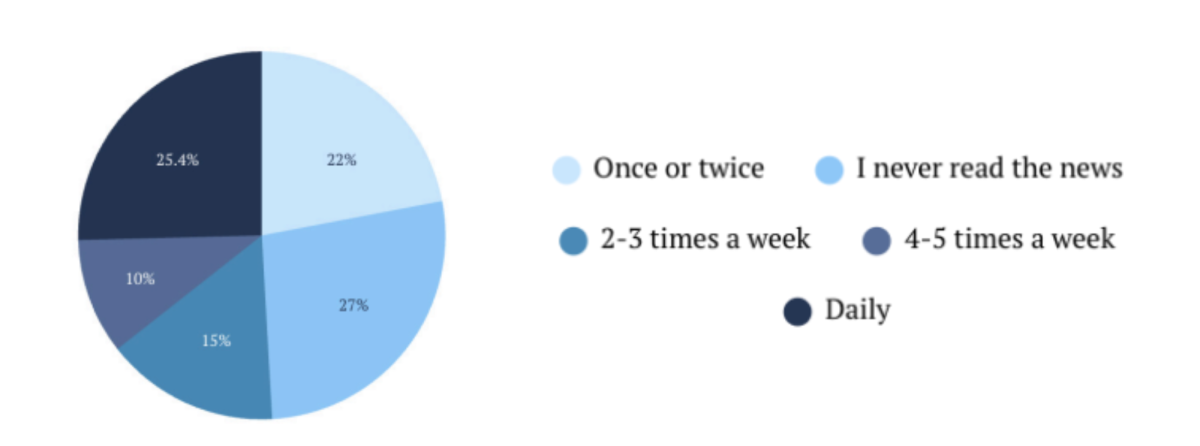
Following the announcement, International Dateline sent a form out to the student body about the new policy. Of the 84 responses, 98.8% thought that the administration should have consulted the student body before officially adopting the policy.
Our school’s academic rigor is part of its beauty, but it is also a reason that students should feel seen. By making decisions informed by research not done at WIS, instead of talking to students about their phone management, all the concerns and questions came rolling in all at once.
“I think that you should have had at least some student representatives part of this decision just so that we can have a more realistic view on things,” an anonymous source said.
Students felt like their voices didn’t matter, and they did not know what was truly going to happen with the policy.
The administration wanted to ensure that students could understand the transition and voice concerns, so they implemented 25-minute meetings with each grade the week before the policy would begin.
“I value the things that kids have to say,” Bhalla said. “It’s a really important piece to this whole conversation.”
According to the survey, only 2.4% of students thought that their concerns were properly listened to in these meetings. It is clear that the administration does not want students to feel this way, but they still do. This lends itself to larger discussions that should be held about how students can feel heard in the coming months.
Students are aware of how difficult it is to make these kinds of decisions. That said, students are also aware of how this policy will influence their day-to-day lives. Sending out forms or talking to students about the details of the policy would have made the transition smoother and would have likely made them feel more included.
Instead, because the discussions did not allow for feedback from the majority of students, people felt like there was a disconnect between what the adults thought kids were doing on their phones and what kids were actually doing.
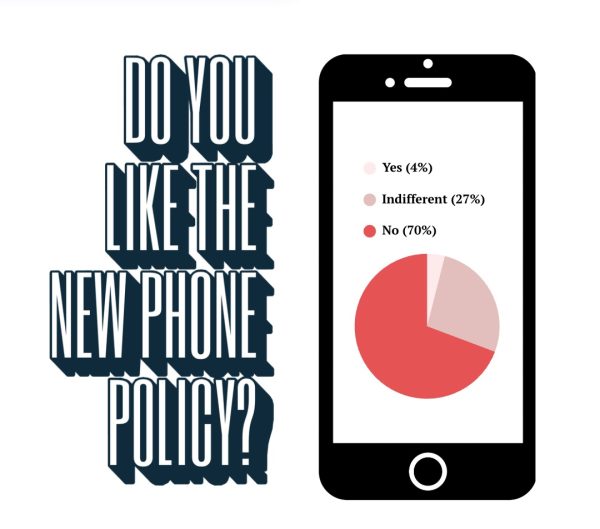
“I think it’s a generalization because it’s assuming that all WIS students are using their phone privileges irresponsibly,” sophomore Eden Christian said.
Furthermore, many, including sophomore Theo Fine, are confused about the total ban on phones.
“It wasn’t necessarily a problem here at WIS,” Fine said.
In fact, 90.5% of students agreed that they would have been okay with a more moderate policy, banning phones unless teachers allow them in class, but allowing them in passing periods.
Phones are not just used for scrolling on social media or ignoring people, they are still tools for communication and quick acquisition of knowledge throughout the day from schedules, emails and photos of notes.
Especially with the new schedule, making club days more packed, phones had quickly become a tool for club leaders to communicate with members. In a time when more people are forgetting to attend or are forced to miss clubs, getting a notification on a phone was a quick way to understand where people were.
“I’m part of six clubs,” freshman Olivia Khoury Lopez said. “And all of them require us to use our phones.”
Dateline has had to shift how it operates because of the ban. Before, phones were used to take quick pictures of events like Sports Day. Now, pictures must be taken with school-issued cameras and be uploaded before being posted. Moreover, with the Model UN club meeting on the same letter day, Dateline can no longer know where everyone is, as people cannot quickly communicate with the club they are attending.
Jemsby understands the scheduling complexities and hopes that we can use our new spaces to mitigate this issue.
“We’ve got all those screens in the [Le Centre Brown],” Jemsby said. “We should be displaying that more with rotating helpful information.”
With the implementation of the policy, there have also been promises to include resources in classrooms and study spaces to ensure the efficiency of learning and well-being of students. One of the promises to continue to allow access to tools is the implementation of iPads in certain classrooms, but there have been problems with getting them.
“They’re saying they’re going to get iPads for every class, and none of that’s happened yet,” Al Said said.
Freshman Enzo Fadakar is hopeful for when the new iPads come, but concerns about the availability of the technology are diminishing his hope.
“They’re not going to be in every class,” Fadakar said. “So in math class, I’m not going to have an iPad to take photos [of the board].”
The ban creates small logistical issues for students every single day. These inconveniences add up, taking up time and making students’ days more stressful.
Before the new policy, phones were allowed everywhere but the dining spaces (Huffard Hall and the Gallery). This moderate policy actually pleased many students, including Fadakar, who was very aware of the time teenagers spend on their phones at home.
“I think lunch has been a good addition,” Fadakar said.
While a plethora of students liked this idea, the administration thought a policy that allowed phones during social times would actually undermine any policy.
“It’s these precise times when you’re with one another and socializing that when we see people walking around [on their phones] and not talking to each other,” Jemsby said. “And those [are] vital moments when you can be with one another and socializing and interacting.”
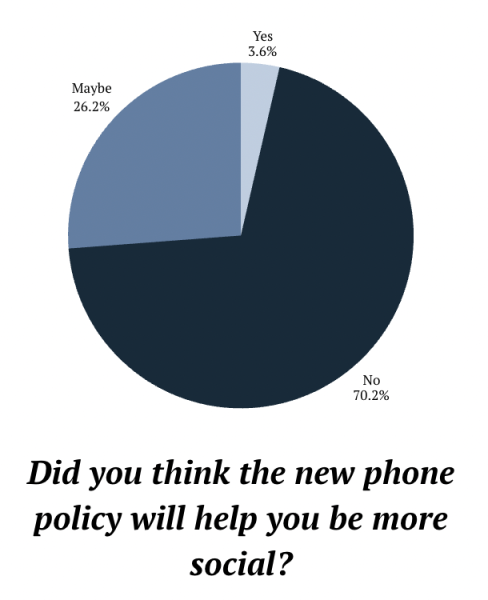
While social interaction has been cited as a main reason for the policy, only 3.6% of students said that the new policy would make them more social. And only 3.6% of students said that their days had been better (meaning that they socialize more, feel less stressed and are less pulled to social media) since the phone ban.
Students understand the negative consequences of being on phones too much, but a total ban also destroys many positives that come with phones as well.
Some students, like freshman Divna Stojilkovic, note the importance of learning to deal with cellphones. As the senior class prepares to leave for University in a matter of months, students are eager to have the responsibility to try to deal with phones on their own.
“I think that’s a life skill that should be learned,” Stojilkovic said.
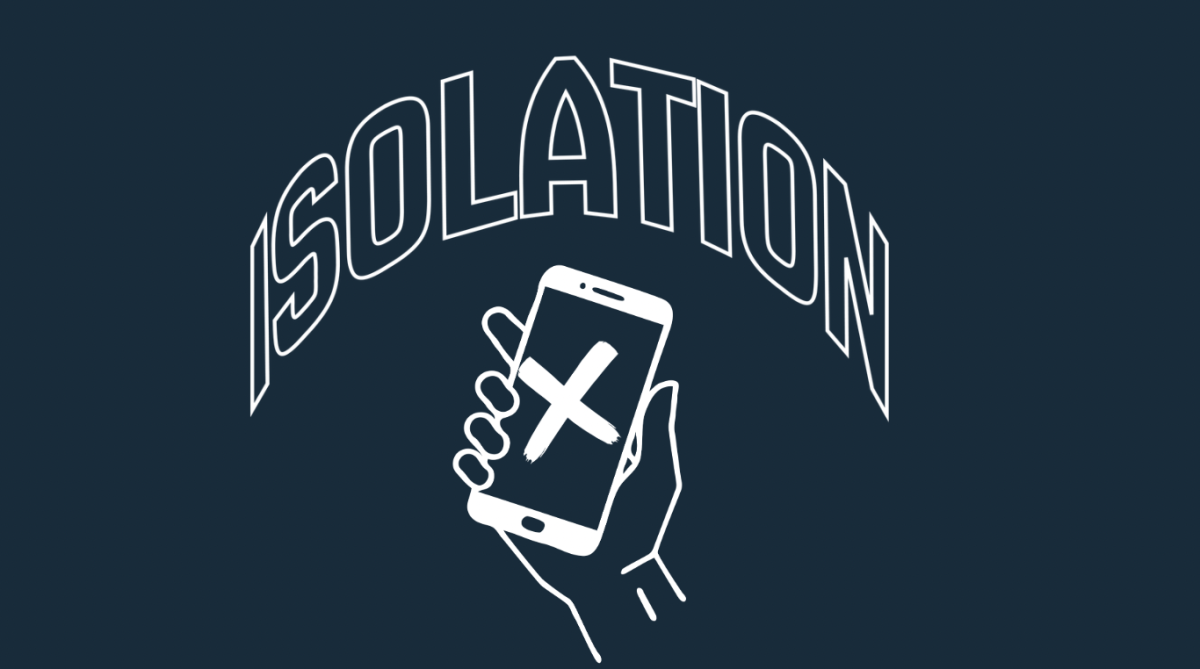
The phone ban represents more than cellphones disappearing. The policy was implemented at a time when students felt isolated, disconnected and ignored. Questions about logistics still persist, and days are made more difficult. It is completely within the right of the administration to make such policies, but it is also completely in the right of students to have a voice. For students to feel heard. For students to understand what is happening. To find common ground with the adults.
As the policy has been in place for about a month now, the novelty has worn off. As an active member in many clubs and sports teams, this policy has made it more difficult for me to plan things and give the information I need to students across grade levels. I miss emails and important notifications all the time because I have to wait to check them in my next class, which will use a computer.
There have been many changes around our campus. The Centre Brown has made learning incredibly fun and fascinating. The new lunch was rated an average of 8/10, with people constantly talking about how good it was. The fun wallpaper in the bathrooms lights up people’s days. Change is not bad. The reason this change came with so much pushback is that students felt like concerns about challenges were ignored and seen as afterthoughts.
I am hopeful that the next few months with this policy can bring more changes. Using boards to show schedules would be incredibly helpful, and improvements in WIFI signals would be appreciated by all. This phone policy does not have to go away, but it can evolve with constructive comments from the community.
The student body does not ask the administration to never make a policy that can be controversial, but we do ask them to give the students a chance to speak.
By Cate Taylor