










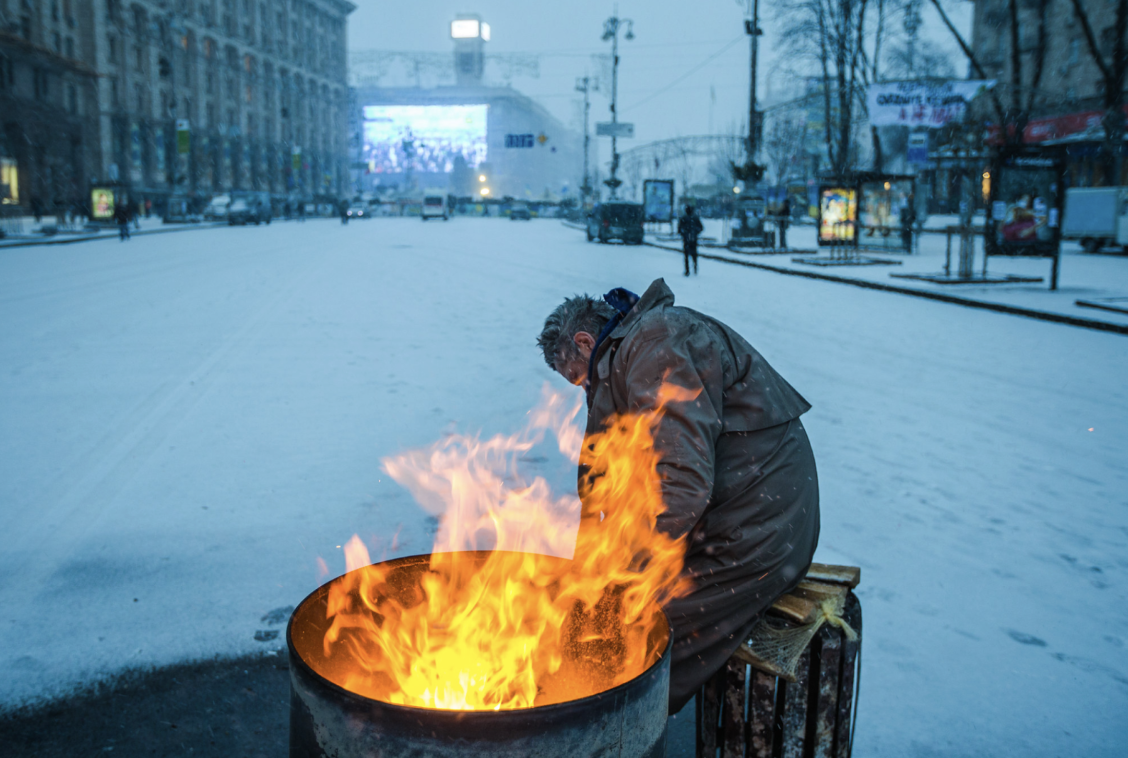



















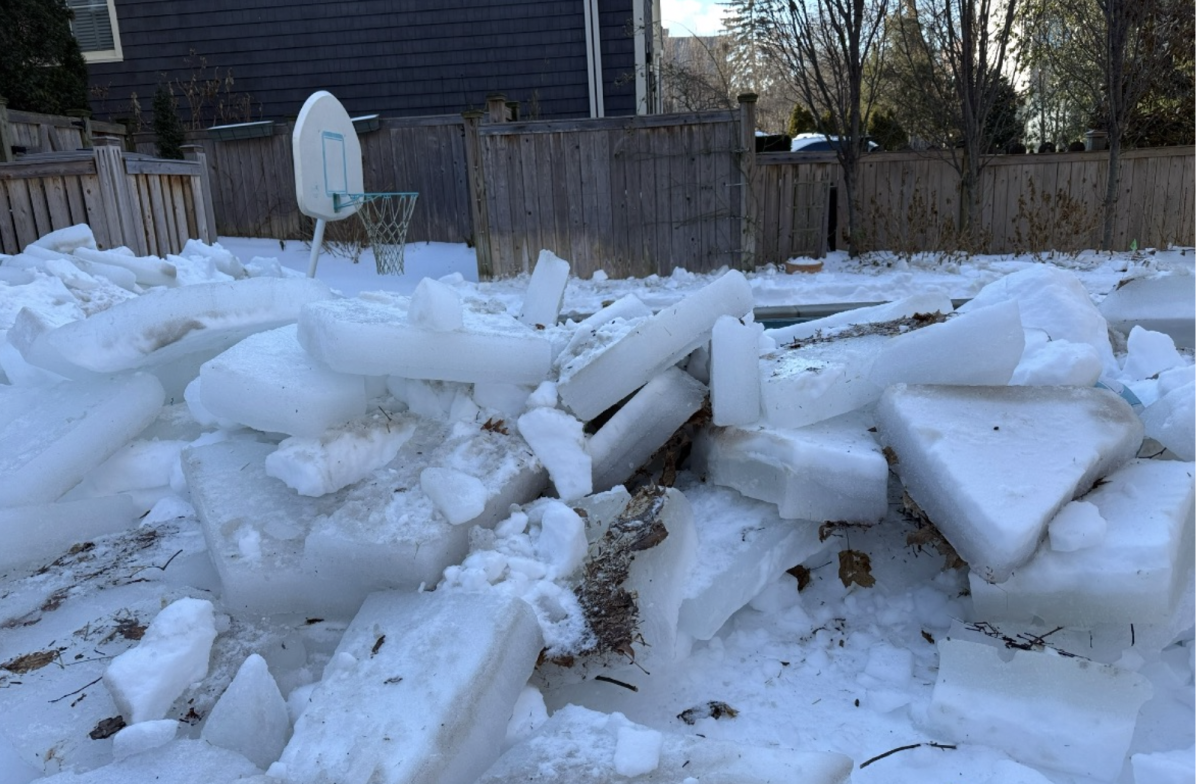
























An icy breeze nearly knocks you over as you struggle to walk along the poorly salted D.C. sidewalks. A white sheet of sleet, ice and a little bit of snow covers the surrounding roofs, lawns and driveways. Layering up with gloves and puffer jackets, you brace yourself for another day out in D.C.’s ice-age conditions, kick-started by a massive snowfall beginning Sunday, Jan. 25.
Since the snowfall, the cold has shown few signs of slowing down. Temperatures have been below freezing nearly every day since the start of January, with some nights dropping into frigid Fahrenheit negatives. It can be hard to imagine that we are in the midst of one of the warmest years on record – and an ongoing global climate crisis – when you can hardly walk three steps without encountering ice. But yes, global warming still exists. Yes, it is still an ongoing problem. There is even evidence that this cold is linked to global warming.
According to Dr. Judah Cohen, a climatologist at Massachusetts Institute of Technology, warmer temperatures in the Arctic cause colder temperatures further south. The Arctic naturally experiences what is called the polar vortex, a series of cold winds in the stratosphere, the second layer of the Earth’s atmosphere. The cold air currents flow circularly around the region and are enclosed by another layer of winds called the polar jet stream, which is a cold wind in the troposphere, Earth’s lowest atmospheric layer.
The Arctic is currently experiencing global warming at a faster rate than any other place in the world, a phenomenon known as Arctic amplification. Sea ice-melting reveals darker ocean surfaces that absorb heat rather than reflect it. This causes more sunlight to be absorbed rather than being reflected, and warming occurs faster. The warmer temperatures disrupt the polar jet-stream, or cause it to wobble, pushing arctic air towards the United States and causing icy cold snaps such as the ones we are experiencing now. Similar atmospheric disturbances are linked to the 2021 winter storm in Texas, leaving thousands without power and resulting in hundreds of deaths.
The connection between cold snaps and global warming is still being researched, but the evidence is interesting and shows even more why, as a society, we must continue to fight for climate policy and legislation.
The evidence that atmospheric temperatures are rising due to man-made climate change still holds true. Earth’s temperature has risen about two degrees Fahrenheit since the late 19th century, undoubtedly brought on by the rise in greenhouse gas emissions that lead to excess heat trapped by the atmosphere, and thus global warming, says NASA. The past 11 years have also been the 11 warmest on record, confirming that global temperatures are rising.
Nevertheless, it is important to remember that progress is being made. Since 2023, the number of companies with net-zero emission commitments has increased by more than 227 percent, and global investment in renewable energy has increased by $1 trillion in 2025 compared to 2023. Countries such as Ireland have reported their lowest greenhouse gas emissions in 30 years, showing how persistent policy and investment can lead to results.
Addressing climate change does not require blind optimism or ignorance, but it does require consistency. Acts like emailing your legislators, participating in grassroots cleanups and staying informed may seem insignificant, but they do contribute to a larger momentum. The science is still evolving, and the challenges remain serious, but progress is visible. Even in cold snaps like these, we can still find ways to work towards a stable climate.
By Lucy Randall