















On any given Saturday evening in the recent months, a stroll down U Street NW in Washington, D.C. will likely bring you face-to-face with a now ubiquitous mural of the so-called “sandwich guy”, drawn on numerous neighborhood sidewalk walls.
On Aug. 11, Sean Charles Dunn threw a foot-long salami sub at a Customs and Border Protection agent on the streets, days after President Donald Trump deployed the National Guard in D.C., initiating a militarized crackdown on the city. “F— you! You f—ing fascists! I don’t want you in my city!” Dunn yelled before hurling the sandwich at the law enforcement agent.
After a short chase, Dunn was arrested and accused of misdemeanor assault. While Dunn, who was working in the international affairs section of the criminal division at the Justice Department, was immediately fired after the incident, the reverberations of his action are felt across the streets of D.C..
Illustrations of the “sandwich guy” began to appear all around the city’s neighborhoods, drawn in remembrance of graffiti artist Banksy’s renowned mural “Flower Thrower”. The original “Flower Thrower” depicts a young man, dressed as a masked militant, throwing a bouquet of flowers. Located in the West Bank of Palestine, the mural serves as a powerful symbol of peace.

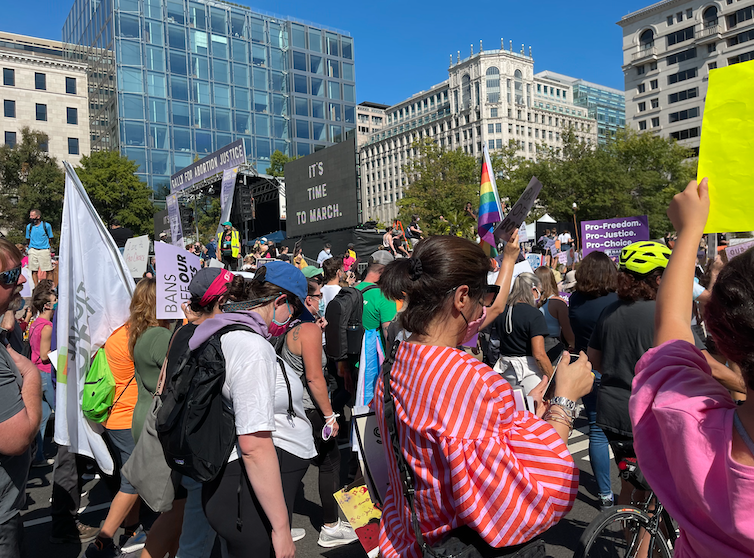
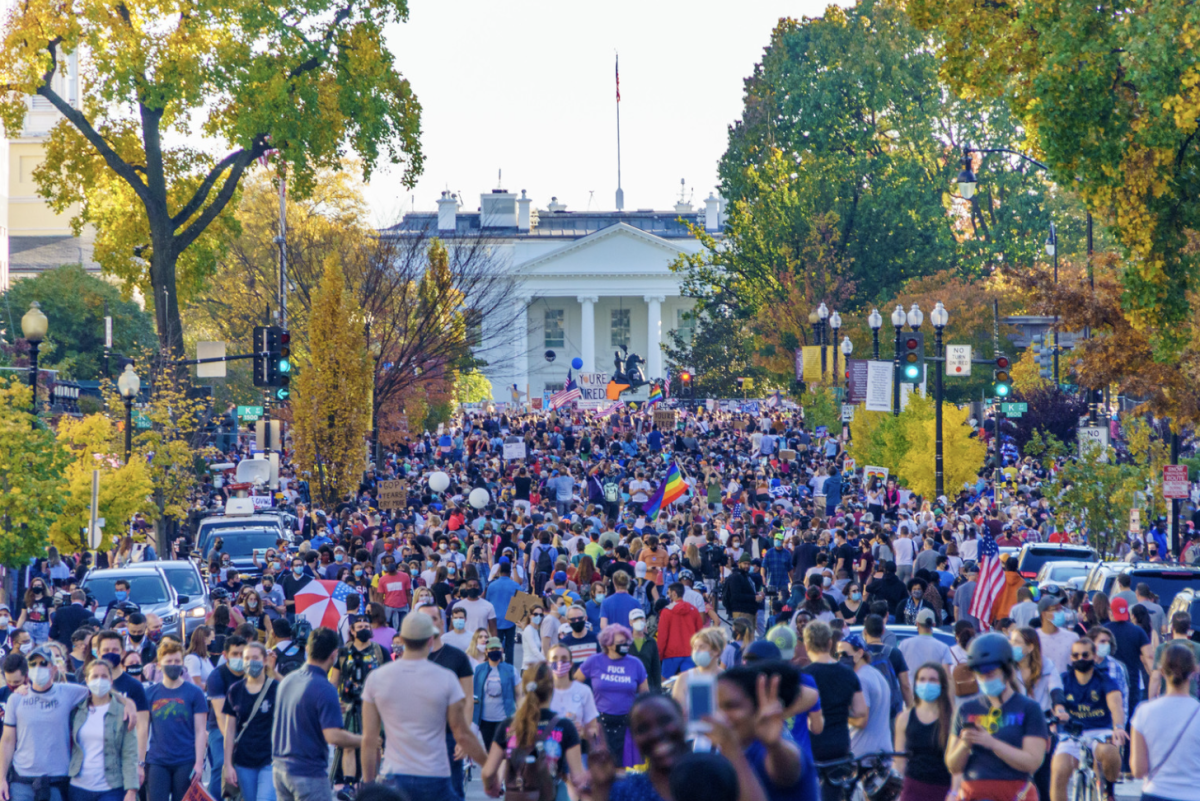
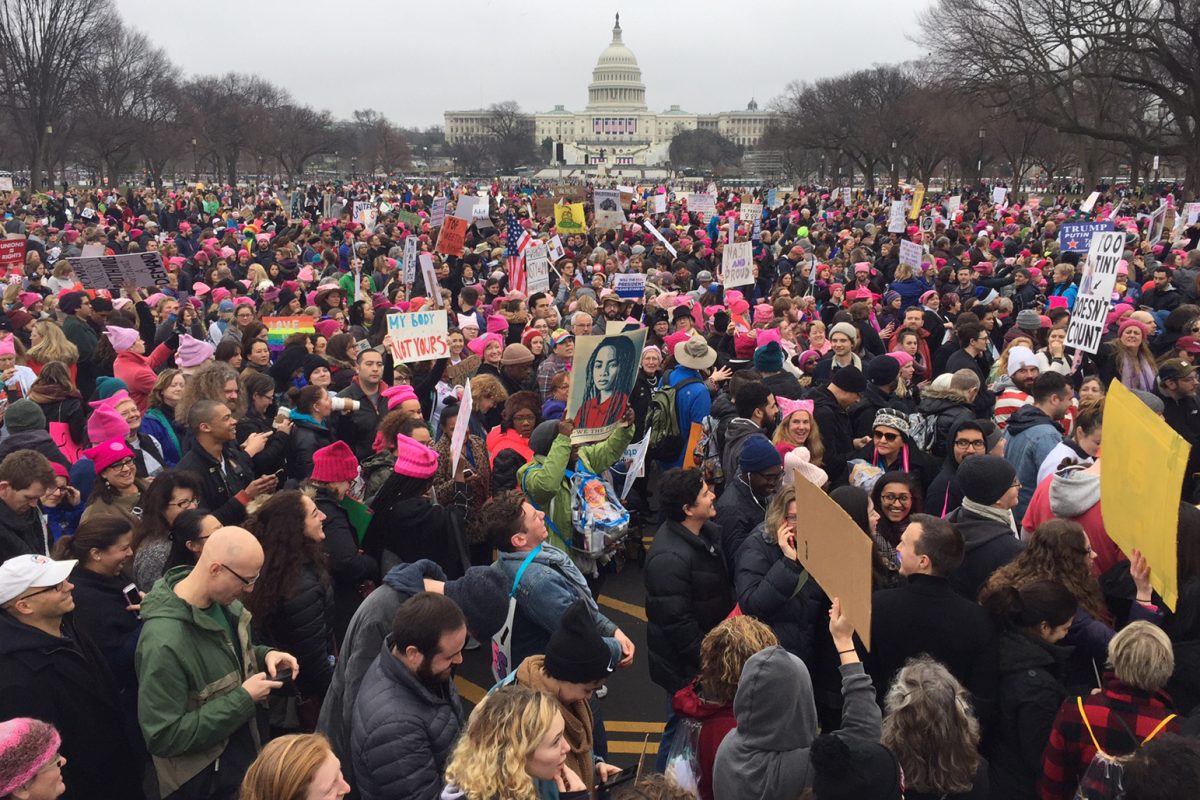
With President Trump’s deployment of the National Guard in August and his subsequent endeavors to interfere further with the city’s police and its citizens, the nation’s capital has seen demonstration after demonstration, protest after protest — the largest one being the “Free D.C.” marches earlier in September. Although the scale of collective action has fluctuated in the two months since the parting of the National Guard, D.C. has seen an increase in wide-ranging forms of resistance, whether quiet or conspicuous.
Notably, the citizens of D.C. have taken to creating street art as a satire of the current political situation. Paste-up art has appeared along 9th and 14th street, including variations of the “sandwich guy” art where the sandwich strikes politicians such as Jeanine Pirro and Pete Hegseth; ICE arresting Jesus; and statements about the National Guard and the curfew throughout Navy Yard and the U St. Corridor. Bus stops have also begun displaying messages denouncing masked ICE agents for hiding behind their anonymity.

However, it is ultimately the smaller acts by D.C.’s citizens that convey the general population’s unhappiness with the situation. On neighborhood websites such as NextDoor, people share photos and maps of where they have seen the National Guard and ICE in the neighborhood. This helps individuals avoid those streets, particularly in neighborhoods with significant Latinx populations.

Despite the incentives of the new 3,000 deportations a day quota and the $1,000 benefit for reporting someone to ICE, residents have banded together against ICE and helped to avoid conflict and confrontation. D.C.’s newfound resistance is not only a defiance of the military takeover but a refusal to comply with an attempted social subjugation.
By Sophia Li and Eileen Maloney Cunningham