

















As violence and chaos sweep over Sudan, millions of civilians are forced to make difficult life-changing decisions to protect themselves and their families. Per Refugees International, as of 2023, more than 12 million people from Sudan had been forced to leave their homes, including 3 million leaving the country entirely.
According to the International Rescue Committee, the civil war between the Sudanese Armed Forces and the Rapid Support Forces, causing domestic disorder involving many civilian deaths, cases of sexual assault, and crimes relating to ethnic cleansing, has severely worsened the Sudanese humanitarian crisis.
Among the millions impacted by the civil war is Mohamed Malik, a third-year software engineering student at Carleton University. Towards the start of the conflict, at the age of 19, Malik fled Sudan to Canada with his siblings.
Malik’s story highlights the realities faced by individuals in such conflicts globally. Holding his uncle’s Sudanese flag close reminds him of the conflict.
“[M]y uncle was shot wearing this flag, and I tried washing away the blood,” Malik said. “As you can see, it’s pretty worn down. It’s pretty dirty. So I thought it would be a good symbolism for the fact that it hasn’t been that clean in terms of peace in Sudan.”
With the idea of peace in mind, Mohamed reflects on his definition of the term, providing a new perspective on it.
“In my eyes, peace is when things are quiet because there is no noise, not awkwardly quiet,” Malik said. “[It’s] like that feeling when you’re with your friend, and you guys are silent just because you guys are choosing to be silent, not because it’s awkward between you guys, but you guys are just enjoying each other’s silence. That is what I define to be peace. When I have a life where I have the freedom to do what I want when I want it.”
His definition of peace connects to his memories of his life in Sudan before the conflict. Malik shares how the relationship with his family while in Sudan together consisted of happy and sad moments that he holds on to. It was always chaotic.
Of these moments, a memory of his family bonding during power outages in Sudan comes up. They used to play cards, even with the electricity cuts, which represented personal and meaningful things to him.
“Electricity would cut out, but we didn’t really see anything wrong with it, because you got used to it,” Malik said. “It got to a point where it’s just a part of your day, the electricity is going to cut from time to time. So we [got to] charge our phones. And we used to play cards to pass time, which was very fun.”
Another memory that Malik shared was one from high school in Sudan. That night, he and his sister went out with friends when their phones ran out of battery.
“The moment we reached home, my mom was out there waiting for me and all of my friends to get home,” Malik said. “She gave them a mouth, yelled at them, all of them, even though two [of us] were her kids, she [yelled at] all of our friends.”
To this day, he and his friends cherish this memory.
“One of my best friends walked up to her,” Malik said. “He was telling her: ‘Khalto, please, this is our last time, we’re just kids in high school trying to enjoy the times that we have before we travel for university.’ It was so fun.”
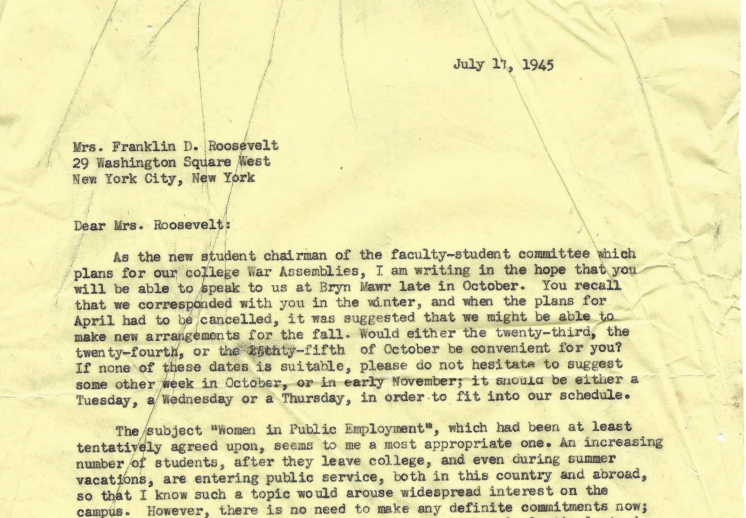
Nevertheless, with his mother now in Nairobi, and he and his siblings in Canada, he hasn’t seen her in around two years. Just before they left, his mother gave him a letter that he kept with him.
“[S]he gave me this letter, and it was very sweet,” Malik said. “That’s why I hold it very dear.”
Unfortunately, Malik and his siblings’ fleeing from the conflict did impact their lives and their lively relationships. Leaving Sudan brought on an uncomfortable quiet between them.
“I think the chaos died down a little bit,” Malik said. “I feel like right now, it’s just that uneasy quietness going on, where it’s just awkward quiet unless someone, unless someone brings up a topic to kind of talk about, or brings up an activity, no one’s really doing anything that they really want.”
This is upsetting for Malik, as he valued his community in Sudan greatly. Malik shares how his community in Sudan was also his family. He mentions how any older person could act as a parental figure.
“We were taught from a very young age that anyone who could give you advice is basically your parent,” Malik said. “Outside, you have to give him as much respect as you give your parents respect.”
Despite the crisis separating Malik and his community in Sudan, he has been able to take the lessons he learned about community to Canada. Malik is able to find other Sudanese people around him. He felt as though he had been able to attract and find his community.
“We did start a Sudanese Student Association at our university, so we’re trying really hard to reach out, for more families to interact, for more people to come and create that sense of belonging again for the people who really longed it and for the people who are really homesick,” Malik said.
Even as Malik assimilates into his Canadian community, he incorporates lessons from Sudan and his parents into all of his decisions. To him, the person you were raised by your parents as a child should be a part of your identity as an adult.
“I really, really believe in carrying the person that you once were into adulthood, because I believe that the way you were raised, the way that you were brought up, and your original household, was the way that you were meant to be as an adult, not just as a child,” Malik said.
Malik highlighted how his journey changed his worldview. In not being able to graduate from high school and bring his varsity jacket from Sudan, the photos he has show how he has changed.
“So, I guess this shows my journey, and it shows how the pictures were back in Sudan, and how they are now, how much I’ve changed physically, and in the way that I smile at pictures,” Malik said.
On top of that, Malik experienced a variety of cultural differences, especially regarding relationships between people. He attributes his culture shock to the way he was raised and the beliefs he grew up with.
“The selflessness back in Sudan is uncanny,” Malik said. “Back in Sudan, if you were to leave the house and go eat with your friends, you’re fighting [over] who’s paying.”
Yet, despite the differences, Malik is appreciative of his situation. For him, nothing could cause as much fear and discomfort as what he and all of Sudan experienced.
“So I’m just way more grateful,” Malik said. “I became way more positive in terms of future thinking, the way I see the future.”
This was different from how he felt during the conflict and before he fled the country. When the conflict erupted, there was a lot of concern, confusion, and questioning on whether they should stay or leave.
“ [B]eing in that situation and escaping with like the skin of your teeth, you get to be more grateful for every opportunity that you come by because back when you were in that situation, you never even expected to be there,” Malik said. “I never expected to study in any university, like let alone Carleton in Ottawa. I was sitting there excited as hell, talking about, oh, I’m going to live that American dream, right? And here I’m stressed with assignments, what?”
Looking ahead, Malik hopes to reunite his family, wanting to connect his mother and siblings again after so long. At the same time, he wants to be the one to care for them as he thinks that his siblings’ priorities should be themselves, especially since they are so young.
“I think I don’t want them to have that [responsibility??],” Malik said. “I don’t want them to have to worry about someone else. I want them to worry about them. I want them to wish they had a huge house and the best car, and the best clothes. I want to help them with it. I want to be the person they run to.”
On that final note, as the oldest child, there is this sense of responsibility that he feels to care for his family and accomplish this for them. However, it also feels like a subconscious effort and decision from him.
“Probably a lot of the things that I believe in wholeheartedly are subconsciously thought without me having to look for reasoning,” Malik said. “I don’t really look for reasoning when it comes to a lot of the things that I do, because I feel like if I want to do something, I’ll do it.”
By Selena Said